
 Business License

Reading Nook Cabinet Ideas — A Narrow 78 Inch Showcase That Does More Than Display
You set up the reading nook. There's a chair, a lamp, a rug, maybe a small side table. It looks right in the photos.
Then you sit down to read, and you realize: there's nowhere to put the book you're not reading yet. Or the blanket you grabbed from the bedroom. Or the mug that shouldn't be on the armrest. The reading nook looks finished, but it doesn't work yet.
That's usually when people add a bookshelf. And a basket. And another small table. And suddenly the reading nook — which was supposed to be a calm corner — has four pieces of furniture in it and doesn't feel calm anymore.
A narrow display cabinet solves this differently. One piece. One footprint. Does the storage, does the display, doesn't eat the floor.
What a reading nook actually needs to store
People underestimate how much stuff accumulates in a reading corner. It's not just books.
There are the books you're reading now, the ones you finished last week, and the ones you're saving for next month. There's the blanket you pull over your legs when the AC kicks on. A reading light that's separate from the ceiling light. A notebook and pen because you'll think of something while reading. A phone charger. Maybe a small plant because the light in that corner is actually good for it.
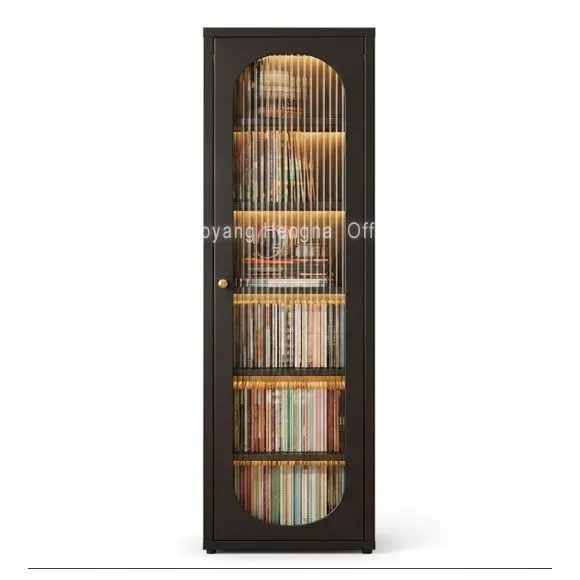
All of that needs a place. If it doesn't have a place, it ends up on the armrest, the floor, or the chair seat — and then the reading nook isn't a nook anymore, it's a pile.
So the cabinet in a reading nook needs to handle layers. Top shelves for the books you're proud of displaying — nice covers, nice spines. Middle shelves for the stuff that's in use — notebook, charger, current read. Bottom shelf or closed storage area for the blanket, the extra cushions, the things that don't need to be on display but you need them within arm's reach.
An open bookshelf does the top two layers. It doesn't do the bottom one. Things look messy fast when everything is visible.
Why 423mm wide works in a reading nook
A reading nook is almost always in a leftover space. The corner by the window. The end of the hallway. The spot between the sofa and the wall that's not quite big enough for another chair.
These spaces are rarely more than 500mm wide. Which means a standard 500mm-wide cabinet doesn't fit, or fits but leaves zero walking room.
423mm is narrow enough to tuck into these leftover corners without blocking the walkway. It's about the width of a standard armchair seat. You can walk past it without turning sideways. It sits there, does its job, doesn't announce itself.
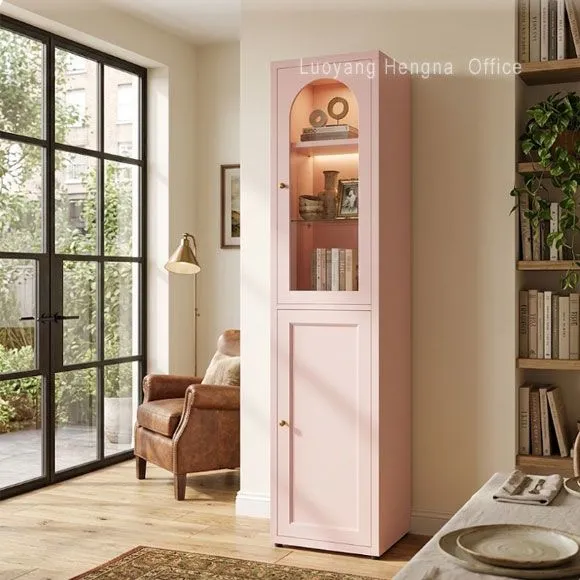
The height is the part that makes it work. At 78 inches, it runs nearly to the ceiling in most rooms. That means you get five, six shelves of storage in the same floor footprint as a chair. The reading nook gets storage without losing floor space — and if the room is small, floor space is the one thing you can't give up.
Glass doors change what the cabinet feels like
In a reading nook, the cabinet is part of the room's atmosphere. It's not tucked away in a hallway or hidden in a closet. You're looking at it while you read.
Solid doors make the cabinet feel like storage furniture — functional, but closed off. Glass doors do two things that matter here.
First, they let the books show. If part of your reading nook is about the books you love having around you, a glass door lets you see them without opening anything. It's decorative storage — the cabinet is part of the room's look, not just a box you put things in.
Second, glass doors keep the dust off. A reading nook is a low-traffic area. Dust settles. Open bookshelves in low-traffic corners get dusty fast, and books are annoying to clean. Glass doors mean you clean the glass once in a while and the books stay clean.
The tempered glass we use is 5mm thick. It's a standard thickness — strong enough that you don't worry about it, clear enough that it doesn't tint what you're looking at. The frame is steel with a cream white powder coat. Matte finish, not glossy — glossy shows fingerprints, matte hides them. In a reading nook where you're opening and closing doors with book-in-hand, matte matters more than you think.
Lighting: the thing most cabinet descriptions forget
A reading nook cabinet without light is a cabinet. With light, it becomes part of the room's lighting plan.
Optional LED strip lighting inside the cabinet — warm 3000K — does two things. It makes the books and objects on the shelves visible at night, not just silhouettes behind glass. And it provides a low-level ambient light in the reading nook that doesn't compete with the reading lamp.
You don't need the LED. The cabinet works fine without it. But if the reading nook is a place you use in the evening, a cabinet with internal warm lighting changes the whole corner. It's not bright. It's just enough that you can find the book you want without turning on the overhead light and waking everyone up.
Color: why cream white, not stark white, in a reading nook
Stark white in a reading nook can read clinical — like a lab, or a waiting room. Reading nooks are supposed to feel warm and settled. Cream white carries a tiny hint of warmth that stark white doesn't have.
RAL 9001 is the specific shade. It's not yellow, not beige, not ivory. It's cream — close enough to white that it pairs with white trim and white walls, but far enough from stark white that it doesn't feel cold. In a room with warm reading light, cream white picks up the warmth. In daylight, it reads as a soft white.
If your reading nook has wood tones — a wood floor, a wood side table — cream white pairs better than stark white. The wood and the cream feel like they belong together. Starch white and wood can clash in a small space.

Assembly and moving (because reading nooks sometimes move)
People rearrange. The reading nook that's in the bedroom this year is in the living room next year. Or you move apartments and the reading nook is in a completely different kind of corner.
A KD flat-pack cabinet moves with you. Disassemble, pack it in the box it came in (or a new box), move it, reassemble. Steel screws into steel — the threads don't wear out. The cabinet goes back together as tight as the first time.
Wood cabinets, as covered in the steel vs wood comparison, don't love this. The screw holes in MDF or particle board widen after the first assembly. By the second or third, the doors are harder to align.
If your reading nook is permanent, this doesn't matter. If it might move — and reading nooks are the kind of furniture arrangement that often does move — assembly and reassembly matter more than they seem like they should on day one.
What to put on each shelf
A 78-inch cabinet in a reading nook typically gives you five or six adjustable shelves. Here's how people actually use them:
Top shelf: decorative objects, a small plant, maybe a few special edition books you want to show off but don't need to grab daily.
Upper middle shelves: the books you're currently reading or just finished. The ones you want visible, with good spines facing out.
Lower middle shelves: the notebook, the charger, a small tray for reading glasses, tea light candles, the stuff you reach for while sitting in the chair.
Bottom shelf: the blanket, an extra cushion or two, a basket with bookmarks and highlighters and the odd receipt or bookmark that accumulates.
Not every reading nook uses the shelves exactly this way. But the point is: the cabinet handles display and storage at the same time. Not either/or.
Does it have to be steel?
No. Wood works too. If your reading nook is in a climate-stable room and you're not moving the cabinet, wood is a perfectly fine choice. The comparison between steel and wood is covered separately — this isn't the place to rehash it.
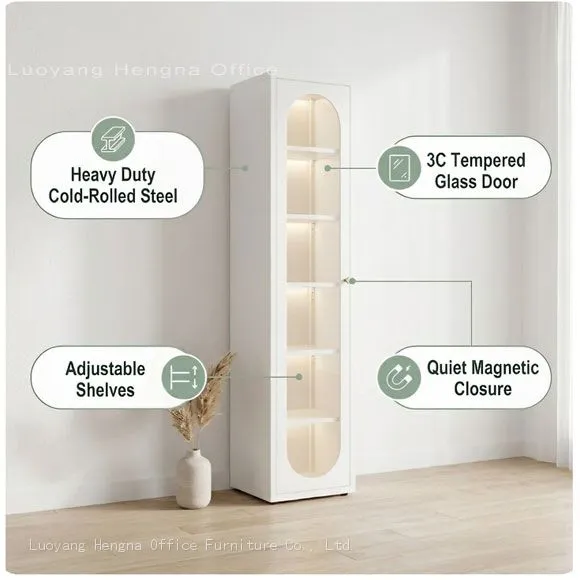
The reason to pick steel for a reading nook cabinet is usually about the narrow width. A steel cabinet can be 423mm wide with full structural integrity. A wood cabinet at that width either has thinner panels (less durable) or is slightly wider (doesn't fit the corner).
If 423mm is the width that makes the corner work, steel is the material that lets you get there without compromising structure.
The reading nook that actually works
A reading nook that works is one you actually use. It has the chair, the light, the rug — and it has the storage that keeps the chair clear and the floor uncluttered.
A narrow 78-inch display cabinet in cream white with glass doors doesn't look like the hero of the room. The chair is the hero. The cabinet is the quiet piece that makes the hero work.
At Luoyang Hengna Office Furniture, we build these cabinets at 423mm wide because that's the width that fits the corners most people forget they had. It's not a standard size — most manufacturers go 500mm and stop. But the corners don't care what's standard. They care what fits.
If you're setting up a reading nook and trying to figure out what goes in the corner, a narrow cabinet is worth measuring for. Measure the space. 423mm is less than you think. It might be the piece that makes the nook actually work instead of just looking good in a photo.
Recently Posted
-
Small Lockers That Actually Fit in a Tight Space — Compact Storage for Teams That Need Every Inch
May 29, 2026Small Lockers That Actually Fit in a Tight Space — Compact Storage for Teams That Need Every Inch"Can We Fit a Locker Here?&q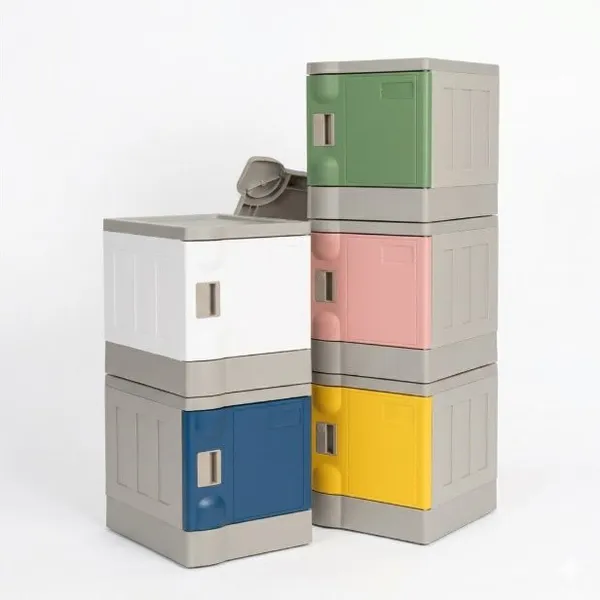 Read More
 -
Gym Locker Room Smells Like Rust? Why and How to Fix It for Good
May 29, 2026Gym Locker Room Smells Like Rust? Why and How to Fix It for GoodThat "Gym Smell" — You've Gotten Used to ItAnyone wh Read More
 -
Can You Keep Lockers Outside at a Campground? Storage That Survives Rain Season After Season
May 29, 2026Can You Keep Lockers Outside at a Campground? Storage That Survives Rain Season After SeasonThe Short AnswerYes — with conditions.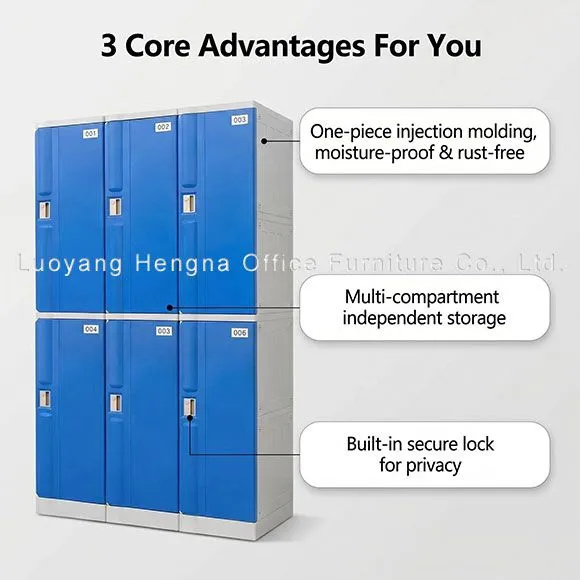 Read More
 -
Why Surf Clubs Are Ditching Steel Lockers — And What They're Using Instead
May 29, 2026The Message Nobody Wants to Get in Peak SeasonSurf club peak season. Lockers get opened 50+ times a day. From 8am when the first s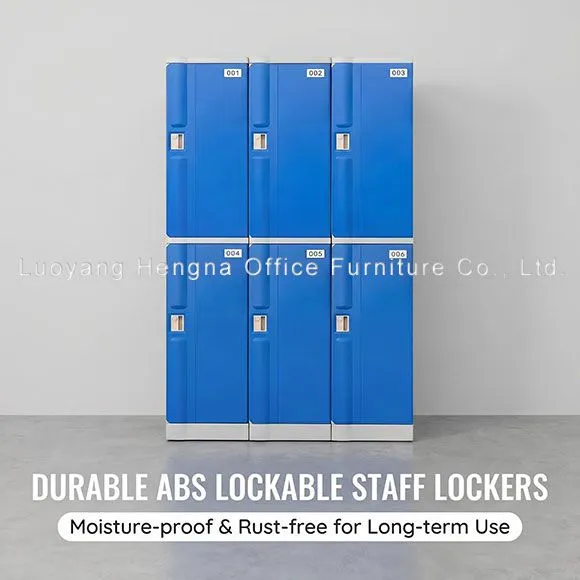 Read More

Contact Us
Recommended Products
-
 Industrial-Grade ABS Plastic Locker for Factory Staff and Warehouse Workers|Hengna OfficeUS$ 19 - 100MOQ: 5 Sets
 -
Outdoor ABS Locker Cabinet – UV-Resistant Plastic Storage for Poolside or Beach Resorts-Hengna OfficeUS$ 19 - 100MOQ: 5 Sets
-
45 Gallon Explosion-Proof Flammable Liquid Storage Cabinet – Fire-Resistant Steel Safety Cabinet for FactoriesUS$ 68 - 400MOQ: 2 Combos
-
Flammable Storage Cabinet for Flammable Liquids – OSHA Certified Safety Cabinet With Fireproof Double WallsUS$ 68 - 400MOQ: 2 Combos
-
Large Capacity Flammable Liquid Storage Cabinet – Explosion-Proof Safety Cabinet for Laboratory & Workshop UseUS$ 68 - 400MOQ: 2 Combos
-
Heavy Duty Steel Tool Cart With Drawers for Workshops|Hengna OfficeUS$ 99 - 269MOQ: 2 Cases
-
Wholesale 3-Drawer Tool Trolley With Wheels for Factory and Garage StorageUS$ 99 - 269MOQ: 2 Cases
-
HN-wlj160 Industrial Rolling Tool Organizer With Pegboard|All-in-One Mobile Tool Storage CartUS$ 5 - 120MOQ: 2 Cases
-
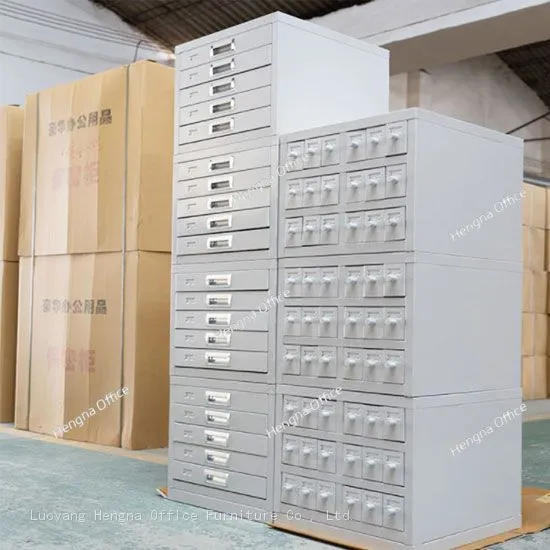
White Stackable Pathology Wax Block Storage Drawers for Labs Near London-Hengna OfficeNegotiableMOQ: 10 Pieces
-
Custom Paraffin Block Storage Cabinet for Histology Laboratories – Factory Direct From Hengna FurnitureNegotiableMOQ: 10 Pieces
-
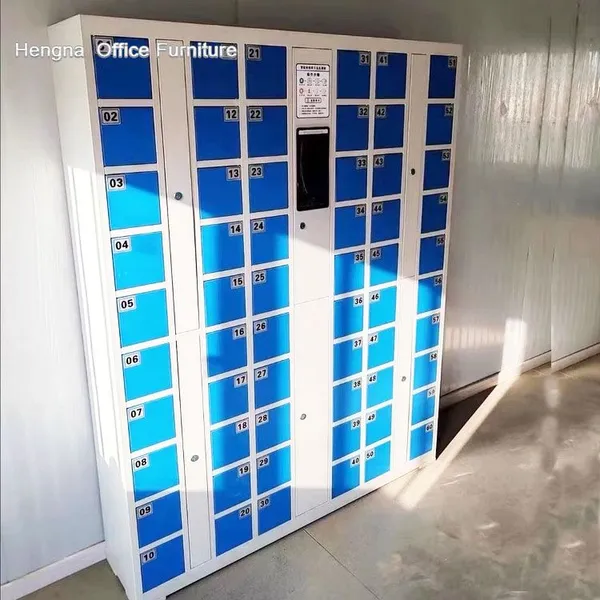
Smart Phone Charging Locker 40-door|Fingerprint Lockers Intelligent Parcel Delivery CabinetUS$ 203 - 750MOQ: 15 Pieces
-
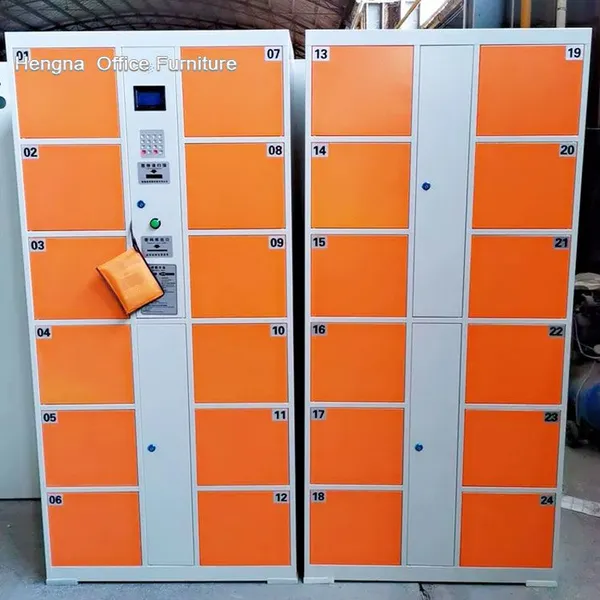
School Gym Lockers Price |Parcel Delivery Storage Locker 12-door FactoryUS$ 203 - 750MOQ: 15 Pieces
-
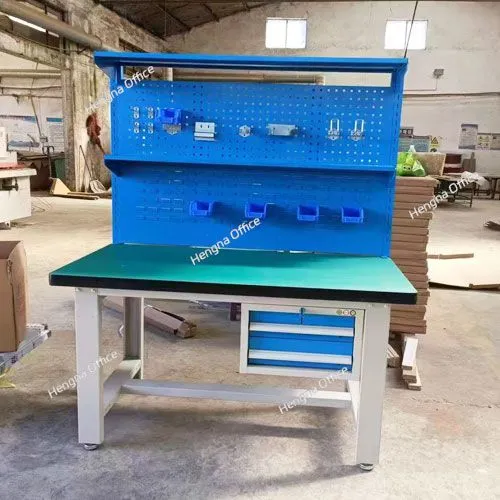
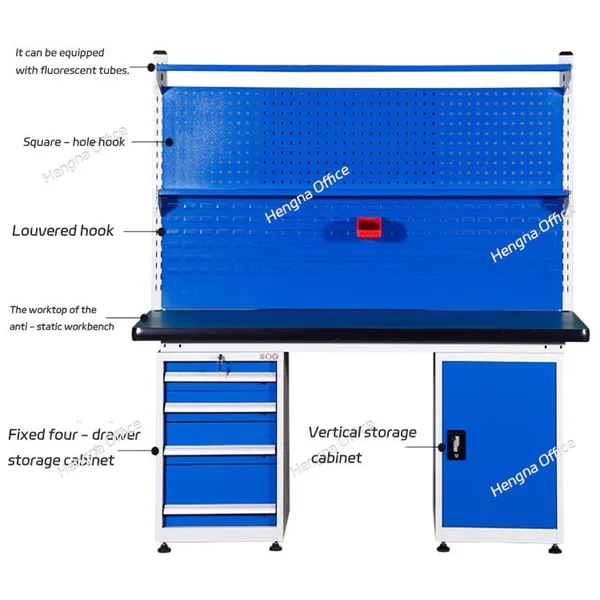
Multi Metal Work Benches Electrical Workshop Workbench|US$ 300 - 800MOQ: 2 Cases
-
Commercial Workbench Supplier |Multi Metal Work Bench With Drawers OMDUS$ 300 - 800MOQ: 2 Cases
-
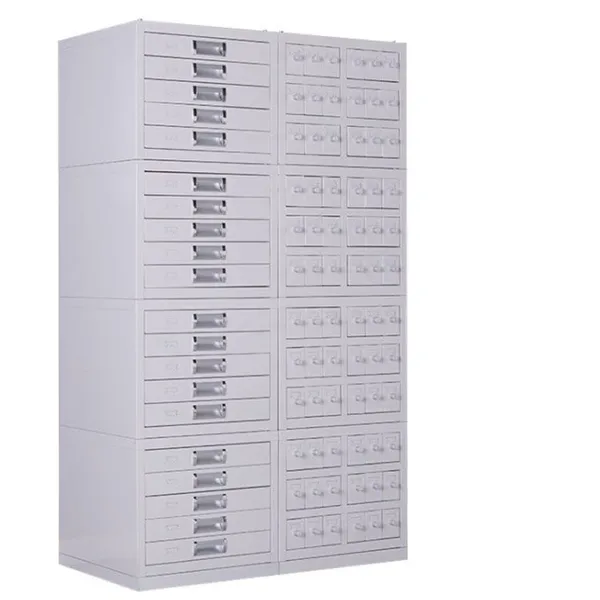
Pathological Ection Cabinet JTGZ062 Wax Block Cabinet for LaboratoryNegotiableMOQ: 10 Pieces
-
Durable Tool Storage in Factory HNGJ703 Hard Wearing Metal Industrial Tool ChestNegotiableMOQ: 18 Pieces
-
High - Quality CNC Workshop Tool Cabinet Heavyweight Workshop Tool OrganizerNegotiableMOQ: 10 Pieces
-
Laboratory Polyethylene Acid and Corrosive Chemicals Safety Storage PP CabinetUS$ 340 - 600MOQ: 5 Combos
-
22 Gallons /80 L PP Acid - Base Cabinet: Safeguard Chemical Storage Supplier OEMUS$ 500 - 600MOQ: 5 Combos
-
4 - Gallon Corrosion-resistant Safety Cabinet for Hazardous Chemicals Acid SupplierUS$ 340 - 500MOQ: 5 Combos