
 Business License

Heavy Duty Steel Workbench for Auto Repair — Cold Rolled Frame vs What Most Garages Use
Mike has been running his independent garage for eleven years. Three bays, two mechanics, a steady stream of brake jobs and transmission rebuilds and check-engine lights.
His workbench is eight years old. Angle-iron frame, bolted together, with a sheet of plywood bolted on top. A vise on the left corner, a bench grinder on the right. When he first built it, the bench sat square and solid. He bolted a transmission rebuild fixture to it in year three. By year five, the bench had a lean. By year seven, the top corner of the vise had dropped half an inch. He shimmed it with a folded gasket.
Last month a customer's transfer case came in — a heavy cast-iron unit from a four-wheel-drive SUV. Mike and his mechanic lifted it onto the bench. The plywood creaked. The whole bench shifted sideways by a quarter inch. They got the job done, but Mike spent the whole time watching the bench instead of the work.
His bench isn't broken. It was never built for the job in the first place.
What Most Garages Use and Why It Fails
Most auto repair shops don't buy workbenches. They build them, or buy the cheapest steel table available and call it done.
The common setup: angle iron from the local steel supplier, cut to size, bolted together. Plywood or MDF top screwed on. Maybe a coat of paint. Total cost under a hundred dollars. Works fine for light work — organizing parts, filling out paperwork, setting down a coffee.
The problem shows up when real work happens on it.
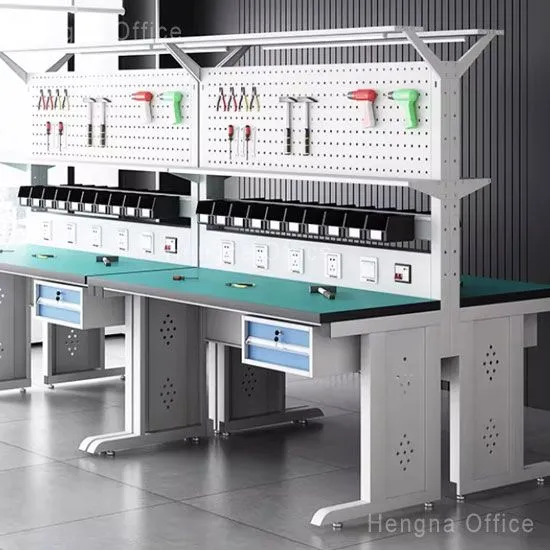
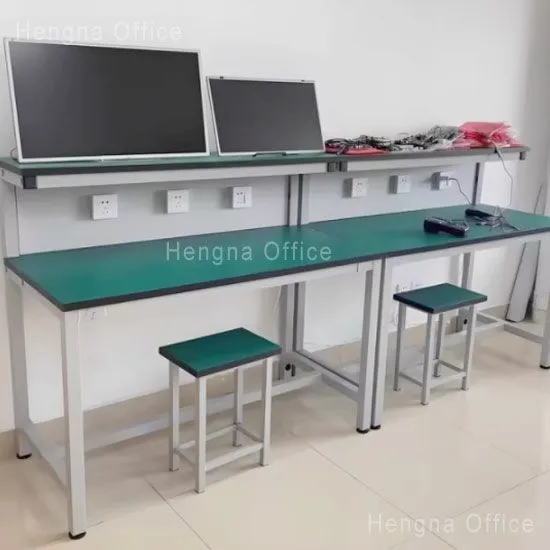
A transmission weighs 80 to 150 kilograms dry. A transfer case, 40 to 60. A cylinder head, 15 to 25. A differential carrier with the ring gear, 30 to 50. These parts get set on the bench. Torqued. Hammered. Leveraged against.
Angle iron doesn't have the torsional stiffness to handle that. The bolted joints work loose under vibration — and a busy garage vibrates constantly. Air tools, impact wrenches, engine starts, floor jacks rolling across concrete, the thump of a lift hitting its top stop. Every one of those events pushes a bolted joint a little closer to failure.
After a few years, the bench leans. The top surface isn't flat anymore. The vise doesn't hold square. The bench grinder walks across the table when it's turned on. The plywood top has oil soaked into it. The whole thing is one bad lift away from collapse.
Cold Rolled vs Hot Rolled Steel — It's Not About Looks
The difference between cold rolled and hot rolled steel isn't visible at a glance. Both look like steel. But the manufacturing process changes how the bench behaves under load.
Hot rolled steel is formed at high temperature — above the recrystallization point of the metal. It cools unevenly. The surface is rough with mill scale. More importantly, the dimensions aren't precise. A 50-millimeter hot rolled angle might measure 49.2 on one end and 50.8 on the other. When those pieces get bolted together, the gaps add up. The bench rocks.
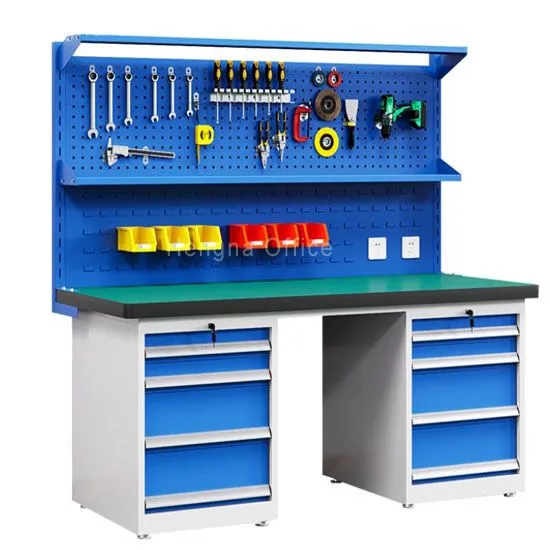
Cold rolled steel is formed at room temperature. It goes through additional processing — pickling, cold reduction, annealing — that gives it tighter dimensional tolerance and a smooth surface. A 50-millimeter section measures 50 millimeters, end to end.
| Property | Hot Rolled Steel | Cold Rolled Steel |
|---|---|---|
| Surface finish | Rough, mill scale | Smooth, uniform |
| Dimensional tolerance | ±1-2mm variation | ±0.1-0.2mm variation |
| Flatness | Can warp during cooling | Consistent and stable |
| Cost | Lower | Higher |
| Best for | Structural beams, frames where precision doesn't matter | Workbench frames, mounting surfaces, precision fixtures |
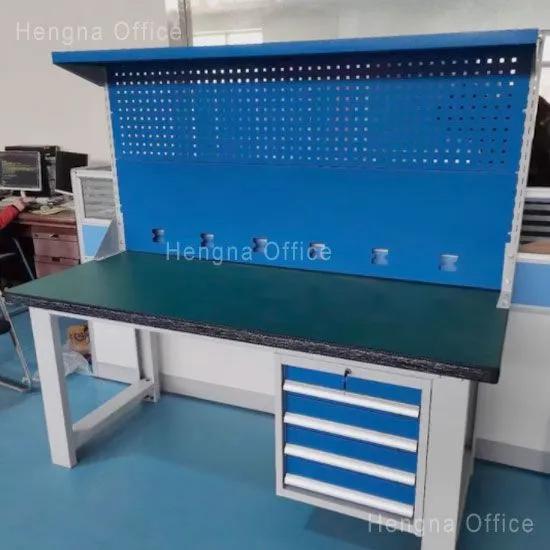
For a workbench, the tolerance difference matters in two ways. First, a frame built from cold rolled steel sits flat on the floor without shims. Leveling feet can do the rest — but they can't fix a frame that's fundamentally out of square. Second, modular accessories like drawer units and pegboard panels mount to the frame. If the mounting points aren't aligned, the accessories don't fit flush. They wobble. Slides bind. The whole modular promise falls apart.
Welded Frame vs Bolted Frame Under Daily Abuse
This is the argument that doesn't need a long explanation.
Bolted joints loosen. It's what they do. Every vibration cycle — and a garage floor generates thousands of them per day — backs the nut off a fraction of a thread. Over months, the fraction adds up. The joint gets play. The play lets the frame twist. The twist puts stress on the remaining tight joints. They loosen faster.
Welded joints don't loosen. The metal is fused. There's no gap to develop, no bolt to back out, no thread to strip.
A cold rolled steel frame with welded joints costs more than a bolted angle-iron frame. It also doesn't lean after five years. For a garage that expects the bench to hold a transmission on a rebuild fixture — or a cylinder head under a valve spring compressor — the welded frame is the difference between a bench that works and a bench that gets in the way.
Bench Configurations for Different Garage Stations
Not every station in an auto repair shop needs the same bench setup:
| Station | What Happens There | Bench Setup |
|---|---|---|
| Transmission bay | Heavy components, rebuild fixtures | Welded frame, wide surface, no drawers underneath (access for fixture clamps) |
| Engine bay | Cylinder heads, timing components, valve work | Welded frame, louver panel for torque wrenches, 2 deep drawers |
| General service | Brake jobs, suspension, diagnostics | Pegboard back panel, 2 shallow drawers for common sockets and bits |
| Tire and alignment | Light work, alignment printouts, lug nut trays | Standard surface, small pegboard, mobile — casters optional |
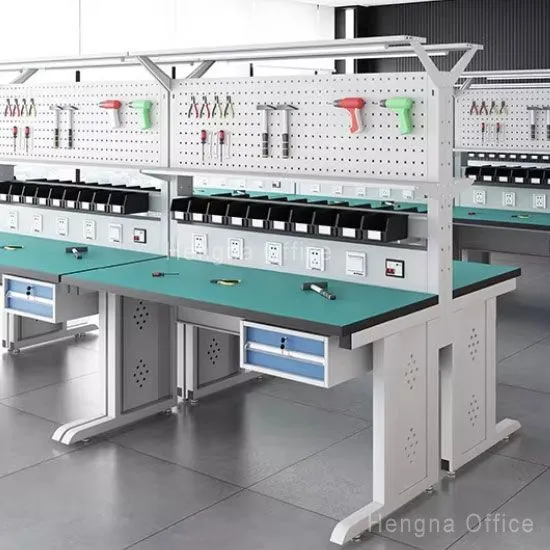
| Electrical and diagnostics | Scan tools, scopes, wiring repair | ESD surface, power outlet strip, 2 drawers for leads and connectors |
A shop with three bays might need two transmission-duty benches and three general-service benches with different drawer setups. Modular frames let each station get the right configuration without needing to order five different bench models.
[Internal link: Heavy Duty Steel Workbench product page]
What Buyers Ask Before Ordering
What size bench do I need?
Standard widths are 1200, 1500, 1800, and 2100 millimeters. Depth is 750 millimeters. For a transmission bay, the 1800 or 2100 width gives room for a rebuild fixture and parts layout. For a general bay, 1500 is plenty. Custom sizes are available.
Can I get casters instead of fixed feet?
Yes. Heavy-duty locking casters can replace the standard leveling feet. Two lockable, two swivel — the bench stays put when it's in use and rolls when it needs to move.
How much weight can the bench hold?
The frame is built for heavy use — transmission rebuilds, engine component work, pressing and hammering. Exact load ratings are provided with the quote based on the configuration.
Can I add drawers or pegboard later?
Yes. The mounting points are built into the frame. A bench ordered as a basic surface-only unit can get drawers and panels added at any time.
What color options?
Standard powder coat colors are blue and gray. RAL custom colors available for bulk orders. OEM silk-screen logos on the frame are standard for custom orders.
How are they shipped?
KD (knock-down). Steel frame parts wrapped in moisture-proof film. Corner protectors on all edges. Surface, drawers, and accessories packed separately in a plywood crate. Assembly takes one person about an hour with basic hand tools.
Warranty?
1 year. Covers structural defects including frame welds and surface integrity. Replacement parts ship within the warranty period.
CE certified?
Yes.
Quote turnaround?
24 hours. Send the number of stations, preferred bench widths per station, and which modules each station needs.
Luoyang Hengna Office Furniture Co., Ltd. has been building steel workbenches for nine years. Cold rolled steel frames with welded joints, CE certified, KD packed for export. OEM logo application and RAL color matching are done in-house — no outside vendor, no added lead time.
Send your garage layout and station requirements for a quote within 24 hours.
Recently Posted
-
Modular Workbench with Pegboard and Drawers — One Bench That Grows With Your Shop
August 5, 2026A shop starts with three people and two benches. Basic surface, no drawers, tools hanging on a pegboard nailed to the wall. Works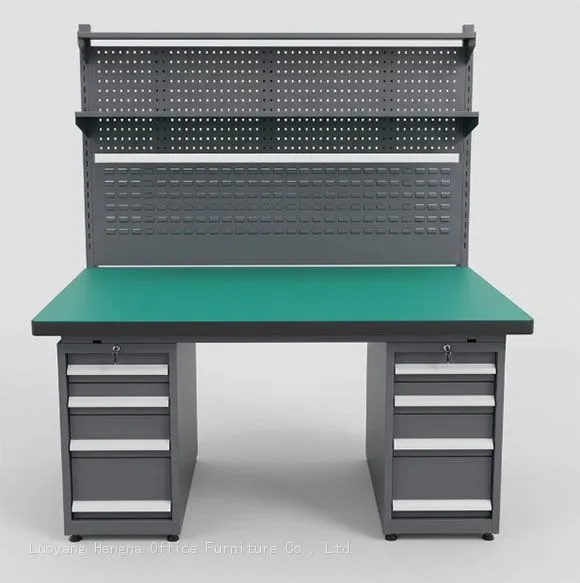 Read More
 -
ESD Workbench for Electronics Assembly — Static Protection Most PCB Rework Stations Skip
August 5, 2026A phone screen flickers and goes dark. A laptop motherboard refuses to POST. An industrial controller board shows intermittent fau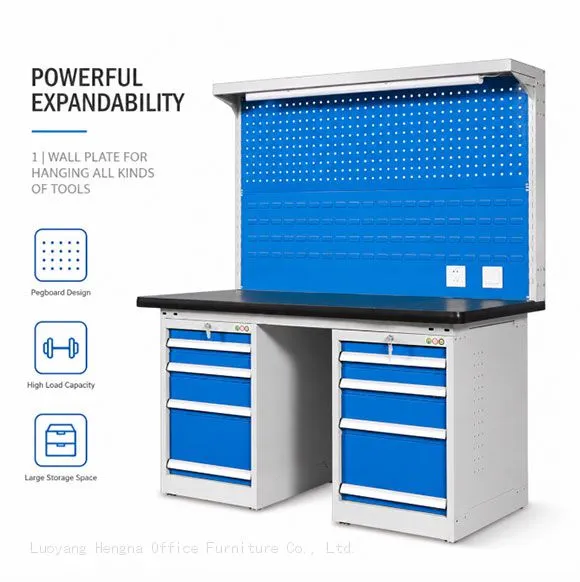 Read More
 -
Stainless Steel Shelving for Breweries and Wineries — What Survives Humidity, Alcohol Spills
July 24, 2026Stainless Steel Shelving for Breweries and Wineries — What Survives Humidity, Alcohol Spills, and Sanitizer Washdowns Three t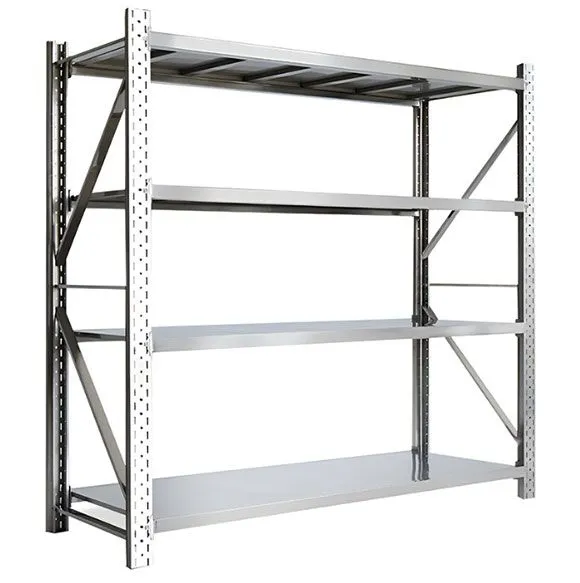 Read More
 -
Stainless Steel Shelving for Meat Processing Plants — What Holds Up Against Blood, Fat, and Daily Wa
July 24, 2026Meat plants are brutal on shelvingIf you work in a meat processing plant, you already know this. The rack that looked fine s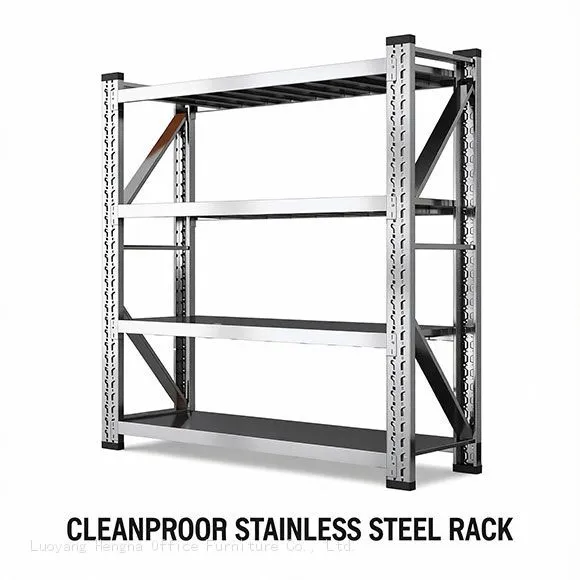 Read More

Contact Us
Recommended Products
-
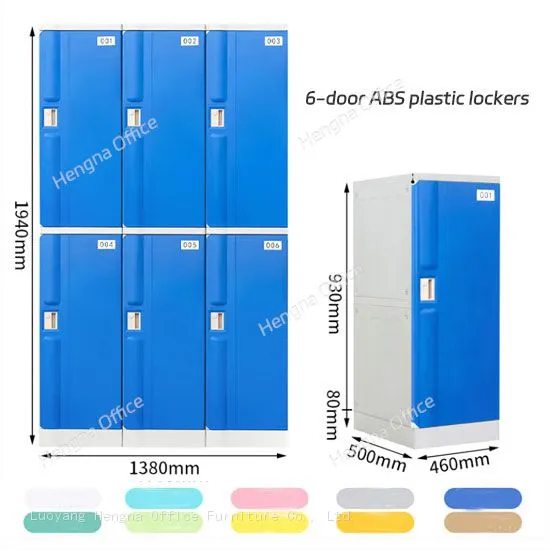
 Industrial-Grade ABS Plastic Locker for Factory Staff and Warehouse Workers|Hengna OfficeUS$ 19 - 100MOQ: 5 Sets
 -
Outdoor ABS Locker Cabinet – UV-Resistant Plastic Storage for Poolside or Beach Resorts-Hengna OfficeUS$ 19 - 100MOQ: 5 Sets
-
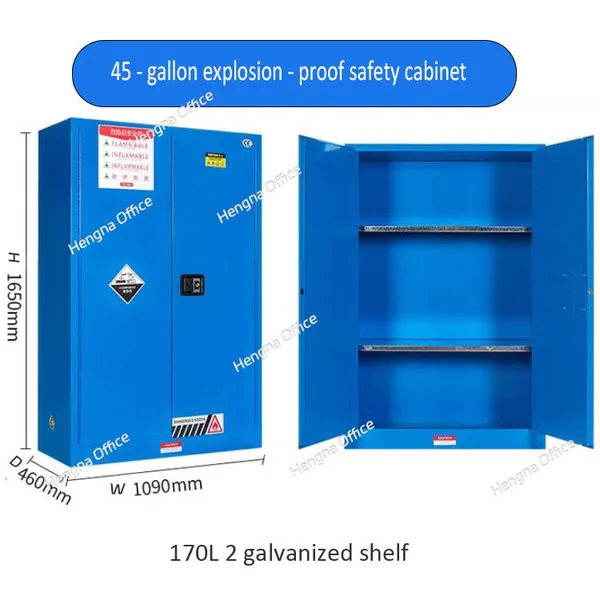
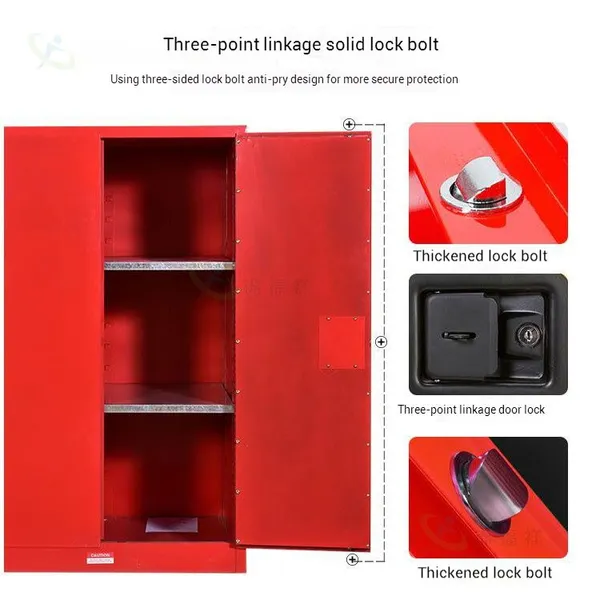
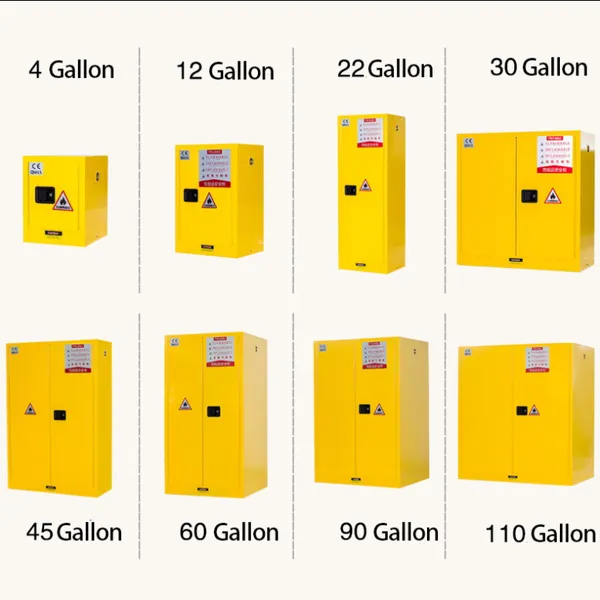
45 Gallon Explosion-Proof Flammable Liquid Storage Cabinet – Fire-Resistant Steel Safety Cabinet for FactoriesUS$ 68 - 400MOQ: 2 Combos
-
Flammable Storage Cabinet for Flammable Liquids – OSHA Certified Safety Cabinet With Fireproof Double WallsUS$ 68 - 400MOQ: 2 Combos
-
Large Capacity Flammable Liquid Storage Cabinet – Explosion-Proof Safety Cabinet for Laboratory & Workshop UseUS$ 68 - 400MOQ: 2 Combos

-
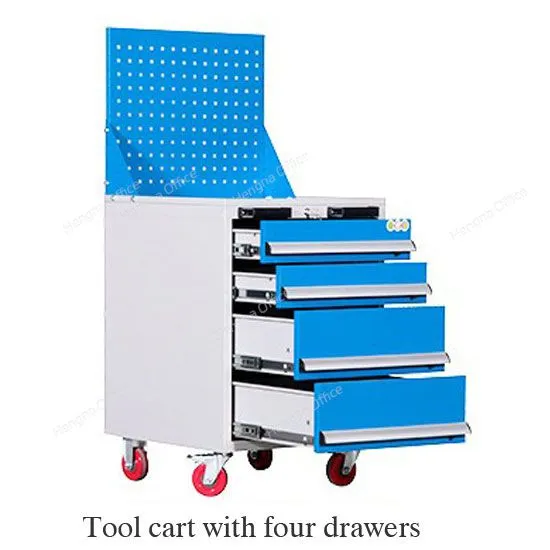
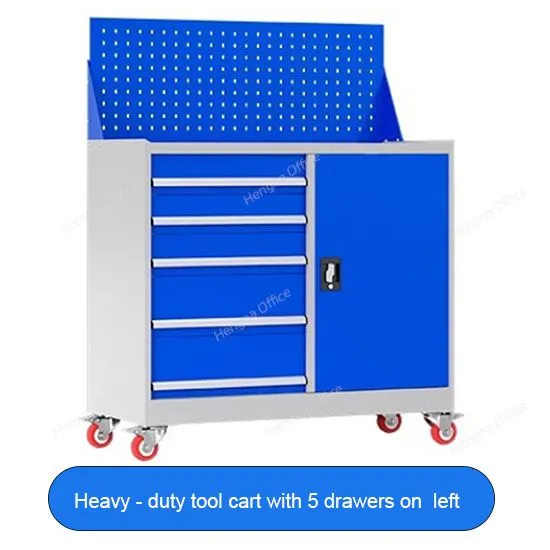
Heavy Duty Steel Tool Cart With Drawers for Workshops|Hengna OfficeUS$ 99 - 269MOQ: 2 Cases
-
Wholesale 3-Drawer Tool Trolley With Wheels for Factory and Garage StorageUS$ 99 - 269MOQ: 2 Cases
-
HN-wlj160 Industrial Rolling Tool Organizer With Pegboard|All-in-One Mobile Tool Storage CartUS$ 5 - 120MOQ: 2 Cases
-
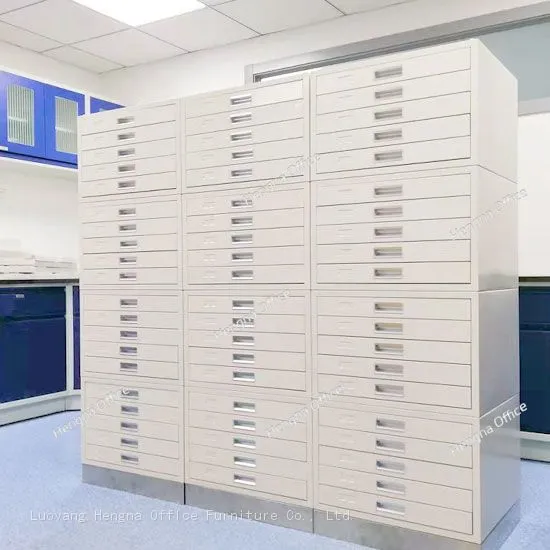
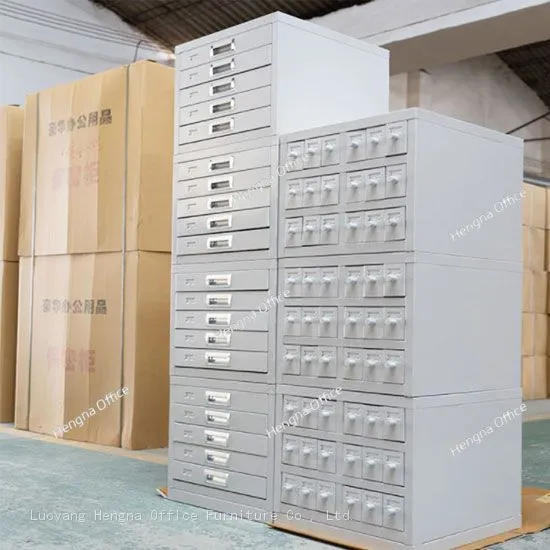
White Stackable Pathology Wax Block Storage Drawers for Labs Near London-Hengna OfficeNegotiableMOQ: 10 Pieces
-
Custom Paraffin Block Storage Cabinet for Histology Laboratories – Factory Direct From Hengna FurnitureNegotiableMOQ: 10 Pieces
-
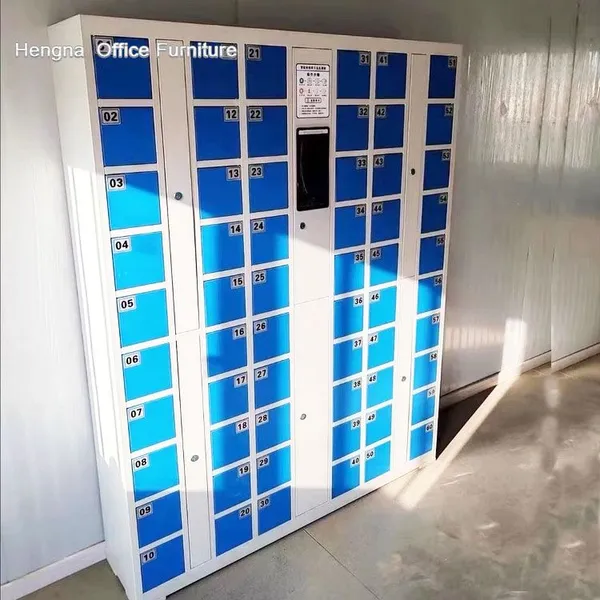
Smart Phone Charging Locker 40-door|Fingerprint Lockers Intelligent Parcel Delivery CabinetUS$ 203 - 750MOQ: 15 Pieces
-
School Gym Lockers Price |Parcel Delivery Storage Locker 12-door FactoryUS$ 203 - 750MOQ: 15 Pieces
-
Multi Metal Work Benches Electrical Workshop Workbench|US$ 300 - 800MOQ: 2 Cases
-
Commercial Workbench Supplier |Multi Metal Work Bench With Drawers OMDUS$ 300 - 800MOQ: 2 Cases
-
Pathological Ection Cabinet JTGZ062 Wax Block Cabinet for LaboratoryNegotiableMOQ: 10 Pieces
-
Durable Tool Storage in Factory HNGJ703 Hard Wearing Metal Industrial Tool ChestNegotiableMOQ: 18 Pieces
-
High - Quality CNC Workshop Tool Cabinet Heavyweight Workshop Tool OrganizerNegotiableMOQ: 10 Pieces
-
Laboratory Polyethylene Acid and Corrosive Chemicals Safety Storage PP CabinetUS$ 340 - 600MOQ: 5 Combos
-
22 Gallons /80 L PP Acid - Base Cabinet: Safeguard Chemical Storage Supplier OEMUS$ 500 - 600MOQ: 5 Combos
-
4 - Gallon Corrosion-resistant Safety Cabinet for Hazardous Chemicals Acid SupplierUS$ 340 - 500MOQ: 5 Combos