
 Business License

Mobile vs Fixed: Choosing the Best Industrial Pegboard Storage System | Louvered panel tool rack
When upgrading a workshop or warehouse storage infrastructure, one decision stands out as the most critical: Should you choose a Mobile storage system or a Fixed one? This choice impacts not just the layout of your facility, but the daily workflow, safety protocols, and long-term flexibility of your operations. The Industrial Pegboard Storage System by Hengna Office is versatile enough to cater to both needs, but understanding the specific advantages of each configuration is key to maximizing your investment.
The Case for Fixed Pegboard Storage Racks
The Fixed Model is the traditional workhorse of the industry. It is designed for stability and permanence, creating a rock-solid anchor point for tools and equipment.
Key Feature: Level-Adjustable Foot Pads. The fixed racks are supported by heavy-duty legs with adjustable feet. This allows the unit to be perfectly leveled on uneven concrete floors, ensuring absolute stability. There is no “wiggle” or movement when retrieving or hanging heavy tools.
Best Use Case: Dedicated Workstations.
Imagine a Quality Control Station in a precision manufacturing plant. The inspector needs a stationary set of gauges and micrometers. A fixed rack creates a permanent “home base” for these sensitive tools. The stability ensures that the tools do not vibrate or shift, maintaining calibration accuracy.Best Use Case: The “Tool Wall” Concept.
In a large Maintenance Shop, several fixed racks can be placed side-by-side against a wall to create a massive, high-density tool wall. This layout maximizes the perimeter storage of the room, keeping the center floor clear for movement and machinery.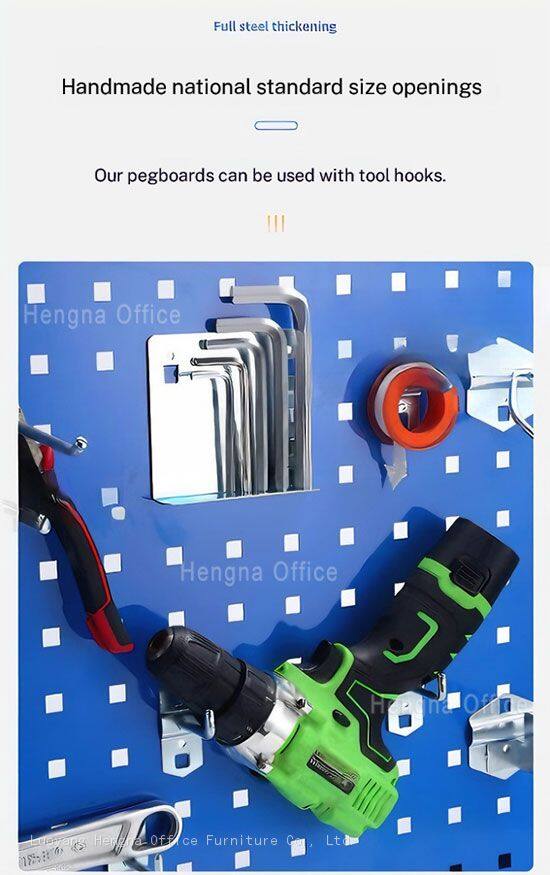
The Case for Mobile Pegboard Tool Carts
The Mobile Model addresses the modern need for flexibility and speed. In many industries, taking the tool to the workpiece is far more efficient than bringing the workpiece to the tool.
Key Feature: Lockable Industrial Casters. These aren’t standard wheels; they are industrial-grade silent universal casters designed to bear heavy loads and roll smoothly over floor debris and expansion joints. The integrated braking system locks both the wheel and the swivel, preventing any movement once the cart is parked.
Best Use Case: Large Facility Maintenance.
Consider a Warehouse Logistics Center spanning thousands of square meters. A maintenance technician cannot run back and forth to a static tool board every time a conveyor belt needs adjustment. A Mobile Tool Cart allows them to load the specific tools needed for the day’s repairs and roll the entire workstation to the back of the warehouse. The cart becomes a mobile field hospital for machinery repair.Best Use Case: Automotive Assembly Lines.
In car manufacturing, assembly teams often move along the line as the vehicle chassis progresses. A mobile pegboard cart allows the team to keep their essential tools moving with them, ensuring they are never more than an arm’s length away from their equipment.
Comparative Analysis: Mobile vs. Fixed
To help you decide, consider this direct comparison of their core attributes in an industrial setting:
| Feature | Fixed Pegboard Rack | Mobile Tool Cart |
|---|---|---|
| Stability | Maximum (No movement) | High (When brakes engaged) |
| Flexibility | Low (Requires disassembly to move) | Maximum (Can be moved instantly) |
| Space Efficiency | High (Can be placed flush against walls) | Moderate (Requires clearance for movement) |
| Ideal For | Inspection stations, Tool cribs, Retail displays | Repair crews, Large warehouses, Assembly lines |
| Dimensions | Depth: 375mm (Compact) | Depth: 610mm (Wider base for stability) |
The Structural Commonality
Regardless of the base choice, both models share the Hengna Quality Standard.
Cold-Rolled Steel Construction: Both are built to last, resisting impact and corrosion.
Double-Sided Design: Both offer double the storage space of single-sided units.
Modular Pegboards: Both utilize the square-hole and louvered panel system for maximum versatility.
Making the Decision
Ask yourself the following questions to determine the right fit:
Do my workers come to the tools, or do the tools go to the workers? If tools need to travel, choose Mobile.
Is floor space limited? If you need to store tools against a wall to save space, choose Fixed.
Are the tools sensitive to vibration? For precision instruments, the Fixed model offers superior vibration dampening.
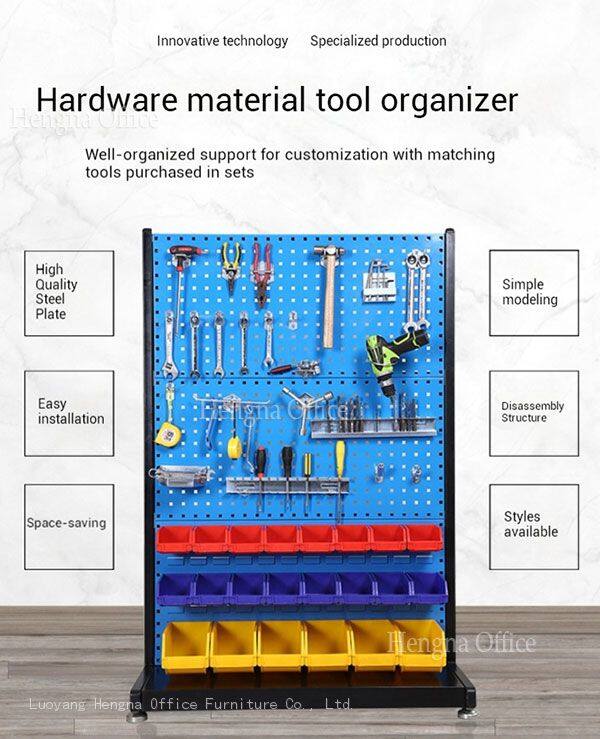
There is no “wrong” choice between Mobile and Fixed, only the “right” choice for your specific operation. The Industrial Pegboard Storage System offers the flexibility to choose. Whether you need the immovable stability of a fixed station or the dynamic agility of a rolling cart, our cold-rolled steel construction ensures your tools are organized, protected, and ready for work.
Recently Posted
-
Standard Size vs. Custom Size: Which Metal Bunk Bed Strategy Fits Your Project Budget?
March 17, 2026When planning a large-scale dormitory project in Saudi Arabia, one of the first decisions a procurement officer must make is wheth Read More
 -
Tool-Free Assembly vs. Traditional Beds: How Much Can You Save on Installation Labor?
March 17, 2026In the world of B2B procurement, the "sticker price" of a product is only one part of the equation. For project managers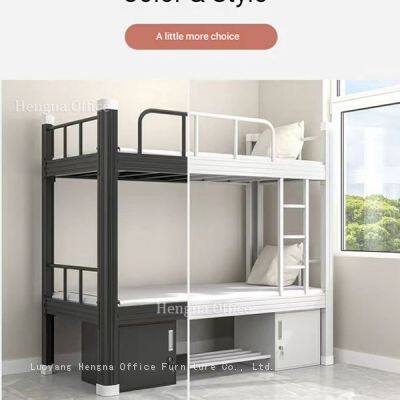 Read More
 -
How 300mm Extra-High Guardrails Prevent Fall Injuries in Crowded Worker Dormitories
March 17, 2026In the high-stakes environment of large-scale construction projects and industrial housing, safety is often discussed in terms of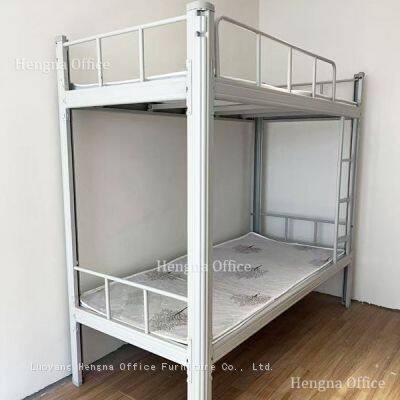 Read More
 -
How to Eliminate Squeaking Noises in Staff Accommodation Metal Beds: A Structural Guide
March 17, 2026For facility managers overseeing staff accommodation or labor camps, few things are as persistent or frustrating as the sound of a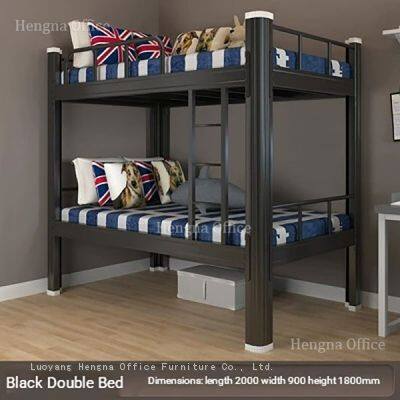 Read More

Contact Us
Recommended Products
-
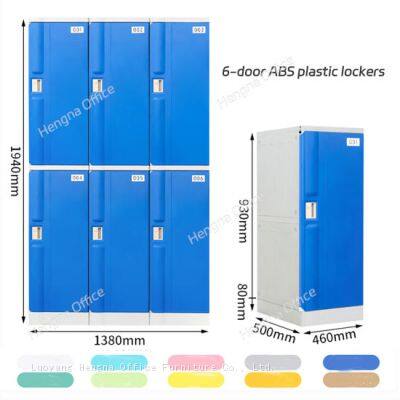
 Industrial-Grade ABS Plastic Locker for Factory Staff and Warehouse Workers|Hengna OfficeUS$ 19 - 100MOQ: 5 Sets
 -
Outdoor ABS Locker Cabinet – UV-Resistant Plastic Storage for Poolside or Beach Resorts-Hengna OfficeUS$ 19 - 100MOQ: 5 Sets
-
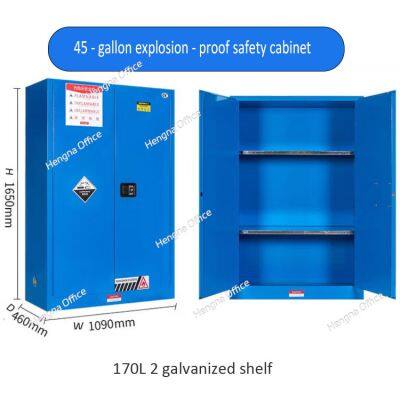
45 Gallon Explosion-Proof Flammable Liquid Storage Cabinet – Fire-Resistant Steel Safety Cabinet for FactoriesUS$ 68 - 400MOQ: 2 Combos
-
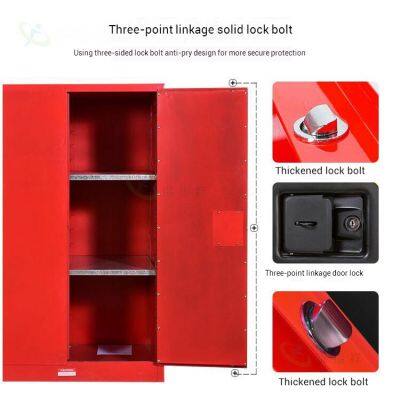
Flammable Storage Cabinet for Flammable Liquids – OSHA Certified Safety Cabinet With Fireproof Double WallsUS$ 68 - 400MOQ: 2 Combos
-
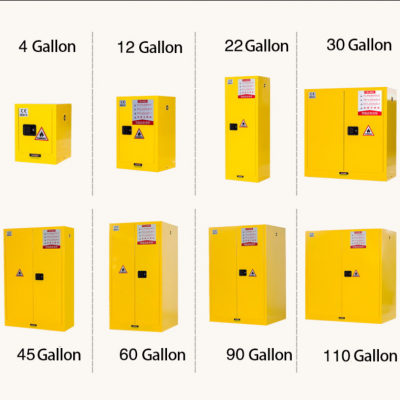
Large Capacity Flammable Liquid Storage Cabinet – Explosion-Proof Safety Cabinet for Laboratory & Workshop UseUS$ 68 - 400MOQ: 2 Combos

-
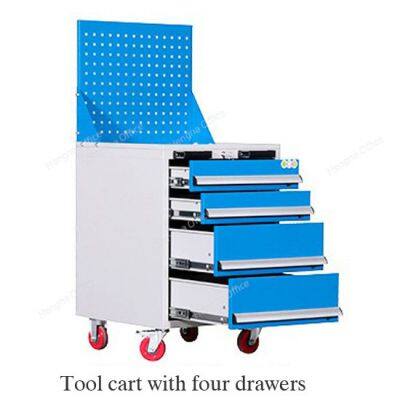
Heavy Duty Steel Tool Cart With Drawers for Workshops|Hengna OfficeUS$ 99 - 269MOQ: 2 Cases
-
Wholesale 3-Drawer Tool Trolley With Wheels for Factory and Garage StorageUS$ 99 - 269MOQ: 2 Cases
-
HN-wlj160 Industrial Rolling Tool Organizer With Pegboard|All-in-One Mobile Tool Storage CartUS$ 5 - 120MOQ: 2 Cases
-
White Stackable Pathology Wax Block Storage Drawers for Labs Near London-Hengna OfficeNegotiableMOQ: 10 Pieces
-
Custom Paraffin Block Storage Cabinet for Histology Laboratories – Factory Direct From Hengna FurnitureNegotiableMOQ: 10 Pieces
-
Smart Phone Charging Locker 40-door|Fingerprint Lockers Intelligent Parcel Delivery CabinetUS$ 203 - 750MOQ: 15 Pieces
-
School Gym Lockers Price |Parcel Delivery Storage Locker 12-door FactoryUS$ 203 - 750MOQ: 15 Pieces
-
Multi Metal Work Benches Electrical Workshop Workbench|US$ 300 - 800MOQ: 2 Cases
-
Commercial Workbench Supplier |Multi Metal Work Bench With Drawers OMDUS$ 300 - 800MOQ: 2 Cases
-
Pathological Ection Cabinet JTGZ062 Wax Block Cabinet for LaboratoryNegotiableMOQ: 10 Pieces
-
Durable Tool Storage in Factory HNGJ703 Hard Wearing Metal Industrial Tool ChestNegotiableMOQ: 18 Pieces
-
High - Quality CNC Workshop Tool Cabinet Heavyweight Workshop Tool OrganizerNegotiableMOQ: 10 Pieces
-
Laboratory Polyethylene Acid and Corrosive Chemicals Safety Storage PP CabinetUS$ 340 - 600MOQ: 5 Combos
-
22 Gallons /80 L PP Acid - Base Cabinet: Safeguard Chemical Storage Supplier OEMUS$ 500 - 600MOQ: 5 Combos
-
4 - Gallon Corrosion-resistant Safety Cabinet for Hazardous Chemicals Acid SupplierUS$ 340 - 500MOQ: 5 Combos