
 Business License

Pegboard vs. Drawers: Which Tool Cabinet Design Suits Your Maintenance Shop?
Introduction
When outfitting a maintenance shop, one of the most fundamental decisions you’ll face is choosing the right internal storage configuration for your tool cabinets. The debate often comes down to two popular contenders: the open visibility of a pegboard and the secure compartmentalization of drawers. But which one is truly right for your workflow?
The answer isn’t always black and white. In fact, many of the most efficient workshops use a hybrid approach. This article will break down the pros and cons of pegboard versus drawer storage, helping you decide how to configure your heavy-duty tool cabinets for maximum productivity.
1. The Case for Pegboard: Visibility and Instant Access
Pegboard, or tool panel storage, transforms the vertical surfaces of your cabinet into a customizable tool wall. Its primary advantage is immediacy.
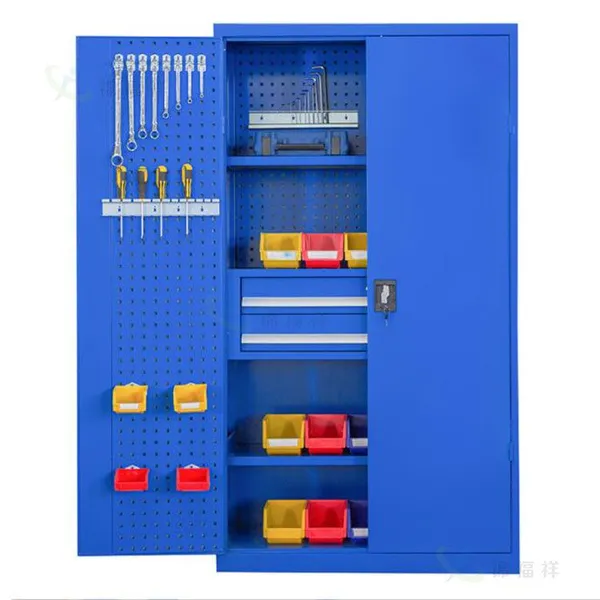
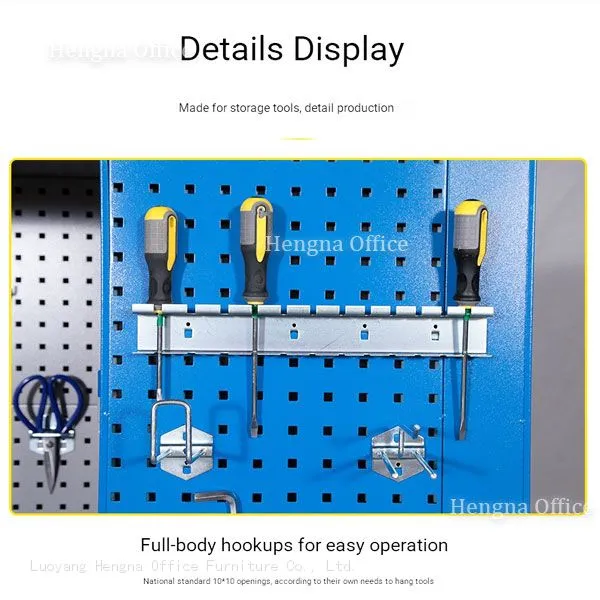
Visual Inventory: With a pegboard, a glance is all it takes to see if a tool is missing or needs to be returned. This “shadow board” effect is excellent for maintaining organization and accountability.
Unmatched Accessibility: For tools used multiple times an hour—hammers, levels, pliers, and screwdrivers—pegboard storage puts them right at your fingertips. There is no drawer to open, no compartment to search through. This speed can shave precious seconds off repetitive tasks.
Ideal for Large or Awkward Tools: Pegboard excels at storing items that don’t fit neatly in drawers, such as cordless drills, extension cords, safety glasses, and levels. Specialized hooks like U-hooks and single slant hooks keep these items secure yet easily accessible.
Note: Pegboard does have its limitations. Tools in high-vibration environments (like a mobile workshop) can sometimes bounce off hooks. More importantly, it offers no protection from dust, moisture, or theft. For precision tools or expensive items, an open pegboard can leave them vulnerable.
2. The Case for Drawers: Security and Systematic Order
Drawers, particularly in a heavy-duty configuration with full-width aluminum handles, offer a different kind of efficiency: systematic organization.
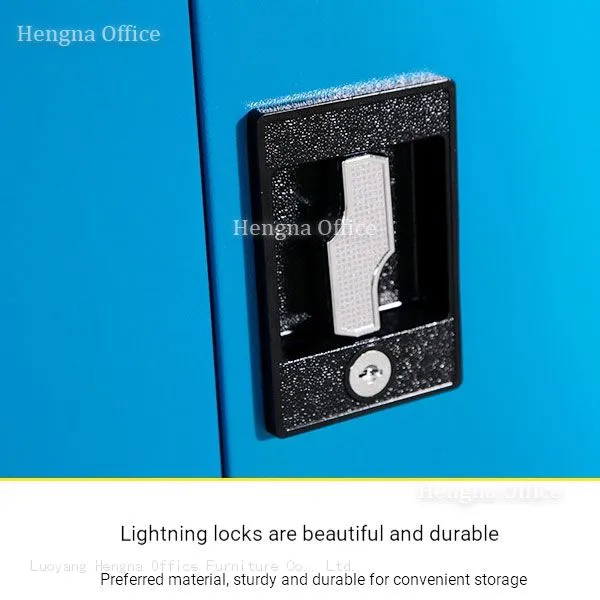
Protection and Security: Drawers protect your tools from dust, debris, and accidental knocks. With an integrated lockable handle, they become a secure vault for valuable diagnostic equipment, torque wrenches, and precision instruments, reducing the risk of theft or misplacement.
Categorized Storage: Drawers allow for incredible organization through the use of dividers and foam cutouts. You can dedicate a shallow drawer to socket sets, a medium drawer to pliers and wrenches, and a deep drawer to power tools. This categorization creates a logical “home” for everything.
Maximized Density: Drawers can hold a high density of small parts and tools without the risk of them falling out, as they might from a pegboard hook. This makes them ideal for storing fasteners, electrical connectors, and small hand tools.
The Trade-off: The trade-off with drawers is access time. While still fast, retrieving a tool requires opening the correct drawer and potentially moving items around, which can be a fraction of a second slower than a pegboard grab.
3. Comparison at a Glance
| Feature | Pegboard Storage | Drawer Storage |
|---|---|---|
| Visibility | High (Visual Inventory) | Low (Hidden until opened) |
| Access Speed | Instant | Fast (Requires opening) |
| Security | Low (Open access) | High (Lockable) |
| Protection | None (Exposed to dust) | High (Enclosed environment) |
| Best For | Frequently used hand tools, awkward items | Valuable tools, small parts, precision instruments |
4. The Verdict: Why the Best Solution is a Hybrid Approach
As many experienced mechanics will attest, you don’t have to choose. The most efficient maintenance shops use a strategic combination of both.
High-use tools that you grab dozens of times a day belong on a pegboard.
Valuable, sensitive, or small organized tool sets belong in drawers.
5. Applying This to Your Workshop with Our Cabinets
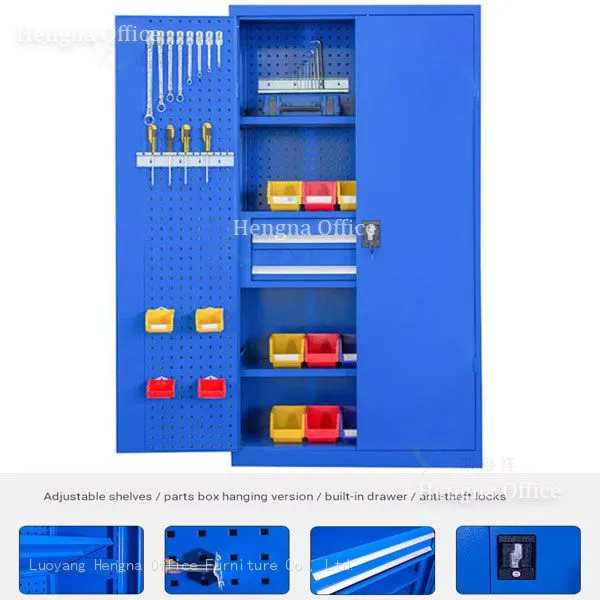
Our heavy-duty tool storage units are designed with this hybrid philosophy in mind.
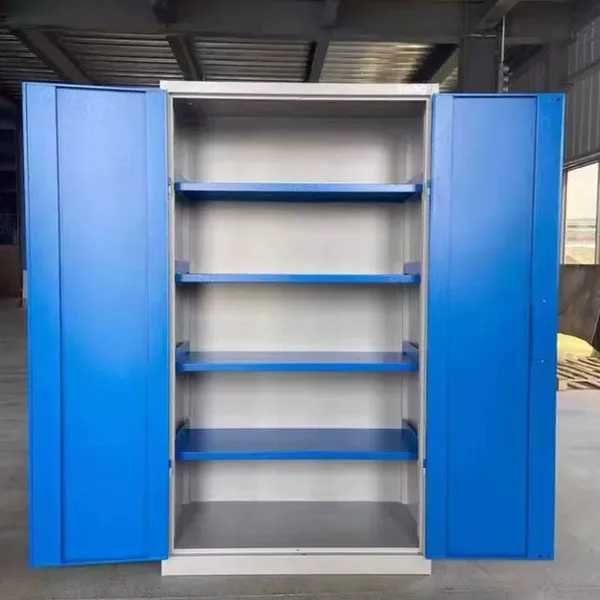
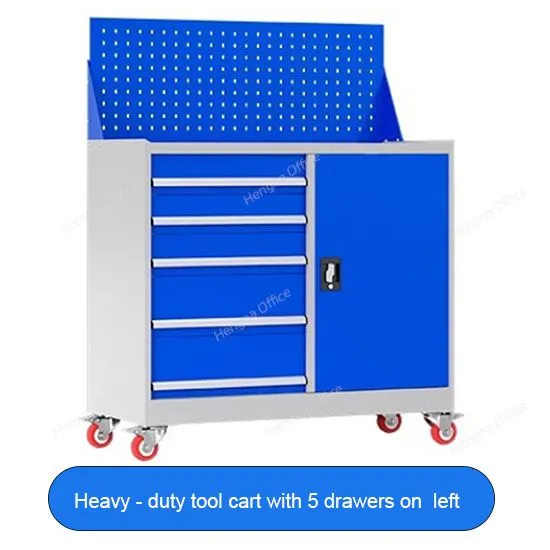
Model HDJG-16ES: Features an integrated pegboard system on the interior of the doors, perfect for hanging frequently used wrenches and screwdrivers. Inside, you can opt for a combination of deep drawers for power tools and adjustable solid shelves for bulkier items.
Model HDJG-11LD: Showcases a 4-drawer configuration ideal for systematic hand-tool storage, while its spacious main compartment can be fitted with mesh panels to effectively create a pegboard-style hanging space inside a lockable, secure environment.
Conclusion
The choice between pegboard and drawers isn’t about finding a single “best” option. It’s about understanding your workflow and using the strengths of each to create a storage ecosystem that saves time, protects your investment, and keeps your shop running smoothly. By selecting cabinets that offer the flexibility to incorporate both, you’re not just buying storage; you’re engineering efficiency.
Recently Posted
-
Stainless Steel Shelving for Breweries and Wineries — What Survives Humidity, Alcohol Spills
July 24, 2026Stainless Steel Shelving for Breweries and Wineries — What Survives Humidity, Alcohol Spills, and Sanitizer Washdowns Three t Read More
 -
Stainless Steel Shelving for Meat Processing Plants — What Holds Up Against Blood, Fat, and Daily Wa
July 24, 2026Meat plants are brutal on shelvingIf you work in a meat processing plant, you already know this. The rack that looked fine s Read More
 -
0.6mm Steel Wardrobe vs 0.4mm — Why Cold-Rolled Single Door Metal Closet Lasts Longer
July 10, 2026The 0.2mm That Decides Whether You Buy One Wardrobe or ThreeTwo wardrobes look identical on a supplier's photo. Same door, sam Read More
 -
Heavy Duty Tool Cabinet with Locks for School Shop: Stop Tool Theft Before It Happens
July 9, 2026A vocational school workshop isn't like a factory floor. The tools aren't being used by seasoned machinists who know where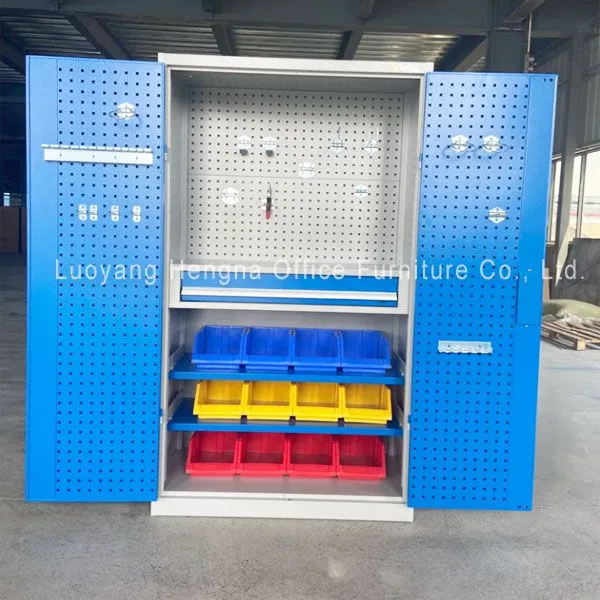 Read More

Contact Us
Recommended Products
-
 Industrial-Grade ABS Plastic Locker for Factory Staff and Warehouse Workers|Hengna OfficeUS$ 19 - 100MOQ: 5 Sets
 -
Outdoor ABS Locker Cabinet – UV-Resistant Plastic Storage for Poolside or Beach Resorts-Hengna OfficeUS$ 19 - 100MOQ: 5 Sets
-
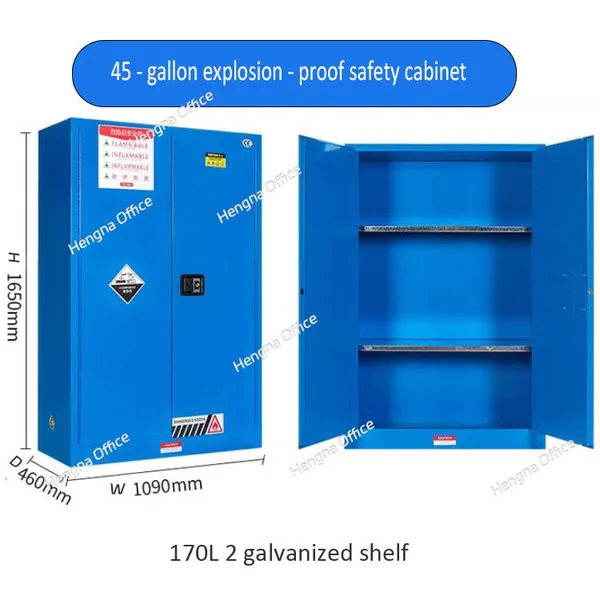
45 Gallon Explosion-Proof Flammable Liquid Storage Cabinet – Fire-Resistant Steel Safety Cabinet for FactoriesUS$ 68 - 400MOQ: 2 Combos
-
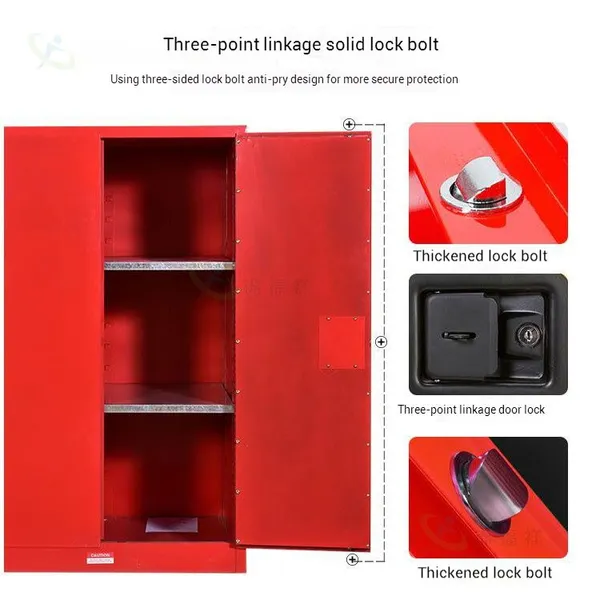
Flammable Storage Cabinet for Flammable Liquids – OSHA Certified Safety Cabinet With Fireproof Double WallsUS$ 68 - 400MOQ: 2 Combos
-
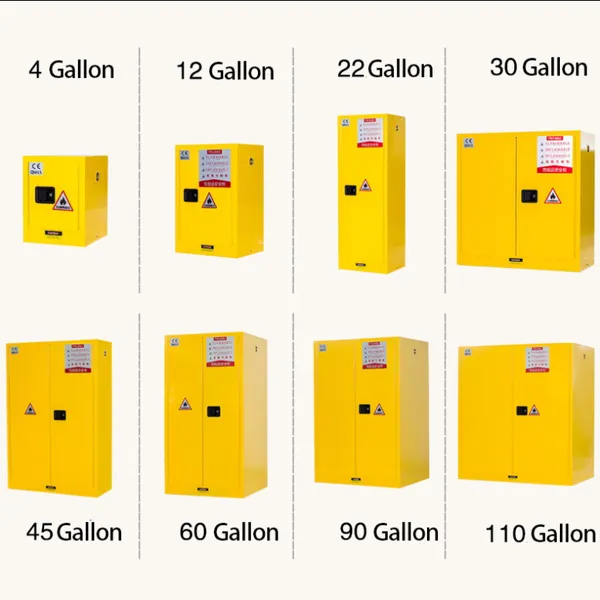
Large Capacity Flammable Liquid Storage Cabinet – Explosion-Proof Safety Cabinet for Laboratory & Workshop UseUS$ 68 - 400MOQ: 2 Combos

-
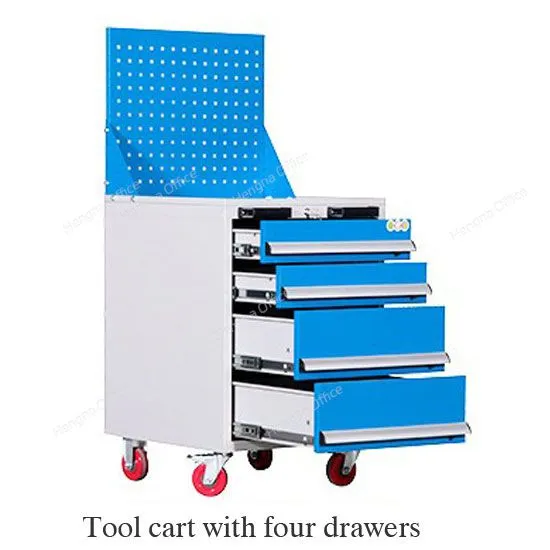
Heavy Duty Steel Tool Cart With Drawers for Workshops|Hengna OfficeUS$ 99 - 269MOQ: 2 Cases
-
Wholesale 3-Drawer Tool Trolley With Wheels for Factory and Garage StorageUS$ 99 - 269MOQ: 2 Cases
-
HN-wlj160 Industrial Rolling Tool Organizer With Pegboard|All-in-One Mobile Tool Storage CartUS$ 5 - 120MOQ: 2 Cases
-
White Stackable Pathology Wax Block Storage Drawers for Labs Near London-Hengna OfficeNegotiableMOQ: 10 Pieces
-
Custom Paraffin Block Storage Cabinet for Histology Laboratories – Factory Direct From Hengna FurnitureNegotiableMOQ: 10 Pieces
-
Smart Phone Charging Locker 40-door|Fingerprint Lockers Intelligent Parcel Delivery CabinetUS$ 203 - 750MOQ: 15 Pieces
-
School Gym Lockers Price |Parcel Delivery Storage Locker 12-door FactoryUS$ 203 - 750MOQ: 15 Pieces
-
Multi Metal Work Benches Electrical Workshop Workbench|US$ 300 - 800MOQ: 2 Cases
-
Commercial Workbench Supplier |Multi Metal Work Bench With Drawers OMDUS$ 300 - 800MOQ: 2 Cases
-
Pathological Ection Cabinet JTGZ062 Wax Block Cabinet for LaboratoryNegotiableMOQ: 10 Pieces
-
Durable Tool Storage in Factory HNGJ703 Hard Wearing Metal Industrial Tool ChestNegotiableMOQ: 18 Pieces
-
High - Quality CNC Workshop Tool Cabinet Heavyweight Workshop Tool OrganizerNegotiableMOQ: 10 Pieces
-
Laboratory Polyethylene Acid and Corrosive Chemicals Safety Storage PP CabinetUS$ 340 - 600MOQ: 5 Combos
-
22 Gallons /80 L PP Acid - Base Cabinet: Safeguard Chemical Storage Supplier OEMUS$ 500 - 600MOQ: 5 Combos
-
4 - Gallon Corrosion-resistant Safety Cabinet for Hazardous Chemicals Acid SupplierUS$ 340 - 500MOQ: 5 Combos